Litigation: Latest Legal Blogs and News
Construction Defect Claims After 12 Years? Pennsylvania Supreme Court Holds the Line
Finding a construction defect does not necessarily mean an owner can recover the repair costs—even when the problem was hidden for decades. In its April 30, 2026 decision in Clearfield County v. TranSystems Corporation, the Pennsylvania Supreme Court confirmed that governmental entities cannot use their special protection from certain filing deadlines to avoid Pennsylvania’s 12-year construction statute of repose.
For contractors, architects, and engineers, the ruling reinforces an important limit on liability for old projects. For owners and developers, it is a reminder that the deadline generally runs from completion of construction—not discovery of the defect.
The Background
Around 1977, Clearfield County entered into agreements for the design and construction of a new jail, involving an architectural and engineering firm, a general contractor, and a masonry subcontractor. Construction was completed in 1981, and the jail opened that year.
During renovations in 2021, a contractor discovered what the County alleged was a major construction defect: the original roof had never been properly connected to the building’s masonry walls.
The County paid approximately $3.88 million to install a bond beam connecting the roof to the walls. In 2023, it sued the original architect’s successor, general contractor, and masonry subcontractor for negligence, fraudulent misrepresentation and breach of contract.
The defendants argued that the lawsuit came too late under Pennsylvania’s statute of repose, 42 Pa.C.S. § 5536, which generally bars covered claims filed more than 12 years after completion of construction.
The County argued that its status as a governmental entity protecting public property and taxpayer funds allowed it to avoid that deadline.
Why the Court Rejected the County’s Argument
The Supreme Court rejected the County’s argument and upheld dismissal of the lawsuit.
The County relied on a doctrine called nullum tempus, which can allow governmental entities to avoid certain lawsuit deadlines. But the Court explained that a statute of repose works differently from an ordinary statute of limitations.
A statute of limitations generally sets the time to sue after a claim arises. A statute of repose cuts off covered claims after a set period measured from an event such as completion of construction.
Pennsylvania’s statute of repose generally sets that cutoff at 12 years for covered claims against architects, engineers, contractors, and other qualifying construction professionals.
The Court emphasized that the legislature intended to give construction professionals an endpoint to potential liability. Allowing governmental entities to bypass that cutoff under nullum tempus would defeat that purpose.
What This Means for the Construction Industry
A hidden defect does not restart the clock. The 12-year period generally runs from completion of construction. An owner who discovers a defect 15 or 20 years later may have no claim against the original construction professionals.
Public ownership does not remove the cutoff. Counties, municipalities, school districts, and other governmental entities cannot use nullum tempus to avoid the construction statute of repose.
Completion records matter. Occupancy permits and records showing when a building opened or became ready for its intended use may help establish when the 12-year period began.
For contractors, architects, and engineers, the ruling reinforces the statute’s protection against claims involving long-completed projects—and the value of keeping records that establish when the work was finished.
Contact attorney Matthew Lautman for a review of your situation. This was written and edited by Pittsburgh attorney Matthew J. Lautman, and authored with research and organizational assistance by Thomson Reuters CoCounsel.
About Us
The litigation attorneys at Houston Harbaugh, P.C., are accomplished business trial lawyers, providing comprehensive support in litigation across a broad spectrum of matters throughout Pennsylvania, West Virginia, Ohio and other jurisdictions upon a special admission basis. Our clients are regional and national small, medium and large companies and individuals who seek well planned and aggressive, but cost effective litigation. We counsel, we budget, we have a deep bench, we act quickly when needed and we have experienced trial lawyers who know the courts and bench. We serve regularly as local counsel for some of the largest law firms in the country when they have matters in this region.

Henry M. Sneath - Practice Chair
Co-Chair of Houston Harbaugh’s Litigation Practice, and Chair of its Intellectual Property Practice, Henry Sneath is a trial attorney, mediator, arbitrator and Federal Court Approved Mediation Neutral and Special Master with 98 trial verdicts and extensive federal and state court trial experience in cases involving commercial disputes, breach of contract litigation, Artificial Intelligence (AI), intellectual property matters, patent, trademark and copyright infringement, trade secret misappropriation, DTSA claims, cyber security and data breach prevention, mitigation and litigation, employment and restrictive covenant litigation, probate trusts and estates litigation, construction claims, eminent domain, professional negligence lawsuits, pharmaceutical, products liability and catastrophic injury litigation, insurance coverage, and insurance bad faith claims. DTSALaw® Business Litigation. Pittsburgh Strong.®
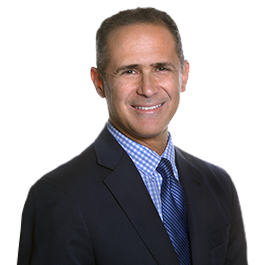
Samuel H. Simon - Practice Chair
As co-chair of Houston Harbaugh’s Litigation Group, Sam focuses his practice on commercial/business litigation. Sam regularly represents clients in the construction, manufacturing, oil and gas, and wholesale/retail/ distribution industries, as well as individuals in matters such as:
- Construction litigation
- Environmental litigation
- Breach of contract disputes
- Oil and gas litigation
- Negligence
- Restrictive covenants (non-compete agreements)
- Civil rights
- Collections/creditors’ rights
- Lease disputes
